As professionals, we are constantly seeking ways to streamline our workflows and deliver exceptional results. Enter bold testing and the Blofgenrator – a powerful combination that can revolutionise your quality assurance (QA) process.
## What is Bold Testing? Bold testing is an approach that challenges the status quo, pushing boundaries and embracing calculated risks. Rather than playing it safe, bold testing encourages teams to explore innovative solutions, identify potential vulnerabilities, and uncover hidden opportunities.
## The Blofgenrator: Your QA Ally The Blofgenrator is a cutting-edge tool designed to support bold testing. With its intuitive interface and robust features, the Blofgenrator empowers you to:
Automate complex testing scenarios with ease
Quickly identify and address potential issues before they escalate
Collaborate seamlessly with your team, fostering a culture of continuous improvement
Generate comprehensive reports that provide invaluable insights
## Implementing Bold Testing with the Blofgenrator Getting started with bold testing and the Blofgenrator is a straightforward process. Our step-by-step guide will walk you through the implementation process, ensuring a seamless transition and optimal results.
## Elevate Your QA with Bold Testing and the Blofgenrator By embracing bold testing and leveraging the power of the Blofgenrator, you can elevate your QA efforts and deliver exceptional results. Unlock new levels of efficiency, accuracy, and innovation – and watch your business thrive.
Ready to take your QA to new heights? Explore the Blofgenrator and experience the transformative power of bold testing today.
A new compliance management platform – shaped by teams from across our group, for the kind of regulated, audit-heavy environments Bold Communications has worked in for decades – brings quality, information security and trust together on one process map and one audit trail.
16/07/2026 · By Bold Communications
Anyone who has prepped for an ISO audit on a shared drive knows the routine: registers, risk logs, the Statement of Applicability and audit schedules scattered across spreadsheets, versions diverging, evidence chased for weeks. Hold more than one certification and it doubles, because ISO 9001 and 27001 share evidence a spreadsheet can’t connect.
A new platform launching this month sets out to retire that routine. Obligara is a compliance management platform that unifies ISO 9001, ISO 27001 and SOC 2 in a single workspace, with a genuine cross-walk between frameworks, embedded AI, and a shared audit trail.
For us at Bold Communications, it is a launch worth marking – because Obligara was shaped by people who have worked in the same regulated, mission-critical environments we serve.
At the centre of Obligara is a genuine ISO 27001 → SOC 2 cross-walk. All 93 ISO 27001 Annex A controls are instantiated per workspace and mapped to 71 SOC 2 Trust Services Criteria through 71 cross-walk mappings. The practical effect: an organisation that already holds ISO 27001 can move toward SOC 2 readiness without rebuilding its evidence base from scratch – or, where it prefers, start from a 40-control SOC 2 pack.
There is a point of direct relevance for the alarm-monitoring world, too: alongside the core frameworks, Obligara supports an NSI Monitoring (ARC) scheme – the kind of standard the Alarm Receiving Centres many of our own customers operate are measured against.
Obligara was developed by compliance and information security specialists from across the Manos Software Group, one of Valsoft Corporation’s decentralized operating entities – including Bold Communications, GeminiSense, and Innovative Business Software. Between them, these teams have spent years running ISO 9001 and ISO 27001 programmes in environments where compliance is an operating requirement rather than an annual exercise: alarm monitoring for control rooms, security operations across the Nordics, mission-critical software for government, banking and healthcare. They maintained the evidence, faced the auditors and were accountable for the gaps – and built Obligara to fix what the available tools were missing.
“For the businesses we work with, compliance is not a growth initiative – it is an operating condition, and a failed audit or a lapsed certification can put contracts, insurance terms and customer trust at risk,” said Marc Cooke, Portfolio Manager at Valsoft Corporation and Managing Director at Bold Communications. “Across a dozen of our businesses I have watched teams carry multiple frameworks across multiple jurisdictions on spreadsheets and willpower. Obligara gives leaders a live view of where they stand across every framework, so compliance becomes something they manage with confidence rather than discover under pressure.”
Embedded AI with human sign-off
Obligara’s AI works inside the customer’s row-level-security boundary using read-only, schema-bound tools. It verdicts each control as ready, partial or gap with the cited evidence behind every call, drafts CAPA root-causes and review inputs, and proposes ISO 27001 → SOC 2 mappings – but it never saves a record on its own. Every assist fills a form for a person to review and sign, and the audit log only ever records a human signature, never the model’s output.
“The tools we used over the years could store documents, but they couldn’t connect the evidence,” said Nathan Meldrum, technical architect of Obligara, who spent eight years building monitoring software at Bold Communications and GeminiSense. “We built Obligara around shared evidence, a single audit trail and AI that handles the tedious drafting while a human signs every record. The architecture reflects the specific shortcomings we hit running ISO 27001 in production.”
Deployment options
Obligara is available as managed SaaS with UK / EU data residency as standard, or self-hosted on-premises or in a customer’s own cloud for the most data-sensitive environments, with SSO / SAML across both.
Obligara is available now. To see the cross-walk, the embedded AI and the shared audit trail running against a real workspace, visit Obligara.com.
About Obligara
Obligara is a compliance management platform that unifies ISO 9001, ISO 27001 and SOC 2 in one workspace, with a genuine cross-walk between frameworks, embedded AI, and a shared audit trail. Obligara is a Valsoft Corporation product. For more information, visit obligara.com.
About Bold Communications
Bold Communications is a UK-based developer of mission-critical alarm monitoring and security communications software, with more than 30 years’ experience serving Alarm Receiving Centres, corporate and industrial monitoring operations, and the public sector. Its GeminiSense platform and related products keep control rooms running across security, government, utilities and healthcare. Bold Communications is part of the Valsoft Corporation group. For more information, visit boldcommunications.co.uk.
About Valsoft Corporation
Valsoft acquires and develops vertical market software businesses that provide mission-critical solutions in their respective niches. Valsoft’s strategy is to invest for the long term, enabling businesses to benefit from global expertise, shared best practices, and a decentralized structure that allows them to retain their entrepreneurial spirit while achieving sustainable growth.
When a critical incident strikes outside of business hours, every minute matters. The quality of support a customer receives in those moments isn’t just a technical consideration — it’s a direct reflection of the trust and partnership we’ve built with them.
That’s why we’ve made a significant investment in how we handle out-of-hours support.
The Problem With the Old Approach
Until now, our out-of-hours call handling relied on a third-party service. While functional, this introduced limitations that weren’t always visible — but were always felt. Delays in escalation, inconsistencies in how incidents were captured, and a lack of direct integration with our internal workflows meant that urgent issues didn’t always receive the seamless, rapid response our customers deserve.
We knew we could do better. So we built something ourselves.
Introducing SmartSupport AfterHours
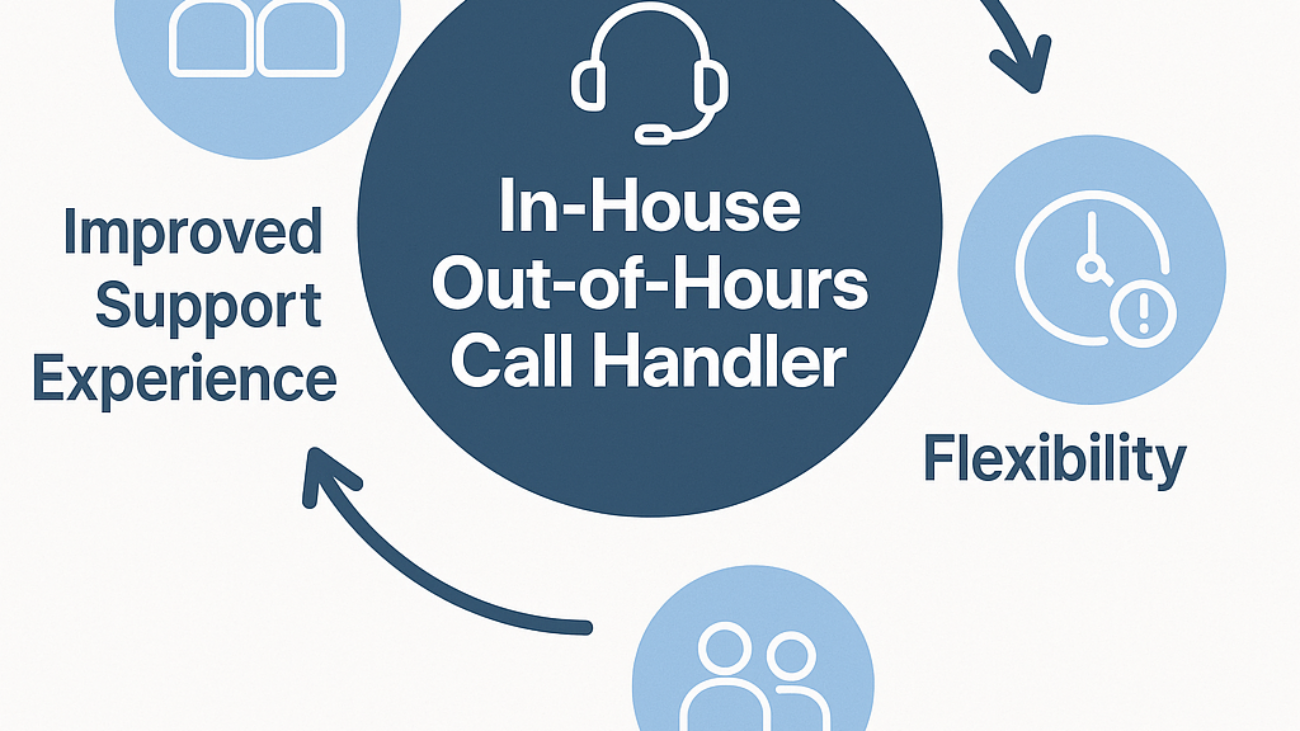
SmartSupport AfterHours is our newly developed, in-house out-of-hours call handling system — built from the ground up by our team to serve our customers more intelligently, more reliably, and entirely on our own terms.
This isn’t an off-the-shelf solution or a patched workaround. It’s a purpose-built system, designed specifically around the way our customers raise urgent incidents and the way our engineers respond to them.
What This Means for Our Customers
Replacing a third-party handler with an in-house system brings meaningful, practical benefits:
Faster escalation — Incidents are automatically routed directly to the on-call engineer the moment they’re raised, with no third-party intermediary slowing the process down
Greater consistency — Every urgent issue is captured and handled through a structured, repeatable process that we own and control end-to-end
More flexibility — Because the system is ours, we can adapt, improve, and extend it as our customers’ needs evolve — without being constrained by external providers
Better integration — SmartSupport AfterHours connects directly with our internal systems, ensuring on-call engineers have full incident context before they even pick up the phone
Improved accountability — Full visibility over every out-of-hours interaction means we can continuously refine our response quality
Key Considerations
SmartSupport AfterHours is designed for urgent incidents that require immediate attention outside of normal business hours. It is not intended to replace standard daytime support channels, which remain the right route for general queries and non-time-critical requests.
Out-of-hours coverage is available Monday to Friday from 17:00 to 09:00 (UK time), and around the clock on weekends and UK public holidays — ensuring that when something critical happens, there is always a clear, reliable path to support.
The system supports multiple methods of contact, giving customers the flexibility to raise an incident in the way that suits them best in the moment.
What Happens When You Raise an Incident
Once an out-of-hours incident is submitted, the process is immediate and structured:
1. The system automatically alerts the on-call engineer by both phone and SMS, with full incident details 2. The engineer contacts the customer directly to assess and begin resolving the issue 3. The entire interaction is logged and tracked within our internal systems
No delays. No ambiguity. No reliance on a third party to get the right message to the right person.
A Stronger Foundation for Customer Support
SmartSupport AfterHours represents more than a technical upgrade — it reflects our commitment to building support infrastructure that genuinely serves our customers when it matters most. By taking ownership of this critical process, we’ve created a more responsive, more transparent, and more adaptable out-of-hours experience.
We’re proud of what our team has built, and we’re confident our customers will feel the difference.
Want to learn more or see SmartSupport AfterHours in action? Reach out to your account representative or get in touch with our team directly — we’d be happy to walk you through it.
Mobile data provides a flexible and easy comms method for security and safety monitoring. With analogue phone lines now heading toward end of life and IP connections not always available, mobile data is becoming the comms option of choice. Many mobile airtime deals are available, however it is not always to easy to find ones specifically designed for security and safety monitoring. Standard mobile tariffs can also work out very expensive for specialised application.
As a result, Bold has developed airtime bundles which are specifically designed for security and safety, and at minimal cost. For example, lone worker devices require mobile data for tracking signals but very low volume for SMS and voice which is only required in the event of an alarm activation. The Bold lone worker tariff fits this user profile and, in common with our tariffs for other specialized needs, offers additional benefits such as non-steered roaming SIMs and pooled data. Other typical applications include alarm signalling and GSM modems.
Bold airtime is not restricted only for use with Bold supplied products – we can offer any tariff to meet your needs, including unlimited fixed cost SMS and high volume data bundles. As well as reducing costs, Bold airtime rationalises the number of your suppliers and optimises technical support associated with security and safety devices. We want to make using Bold solutions as simple and low cost as possible with professional technical support rather than anonymous online portals.
Cost-effective and stable communications is the bedrock of remote and dispersed security protection. Bold Airtime helps deliver the complete solution for your monitoring and communications needs.
For more details, please contact Bold on 01392 364777 or Contact Us
“As the world transitions to digital solutions, our mission remains clear – to ensure that our customers have access to the most innovative and reliable solutions in the market,”
Marc Cooke
Managing Director at GeminiSense
Bold delivered on its promise to provide a solution which fits our requirements. It is clear that much thought and effort has been invested in Gemini. It is a massive step forward compared to systems previously in use in our control room and we are constantly delighted at how responsive and highly skilled the Bold technical team is.
PWG Operations Director
Andy Cotterill
“We considered a number of solutions when it came to upgrading the security systems at the stations, selecting Bold as they are specialists in this area and we have worked with them in the past.”
As professionals, we are constantly seeking ways to streamline our workflows and deliver exceptional results. Enter bold testing and the Blofgenrator ...
When a critical incident strikes outside of business hours, every minute matters. The quality of support a customer receives in those moments isn't ju ...
The world’s largest manufacturer of CCTV solutions, Hangzhou Hikvision Digital Technology, employs over 40,000 people, including 19,000 working in R&D. The significant investment in forward looking technologies such as Artificial Intelligence and cloud computing has allowed Hikvision to achieve a significant presence in the CCTV sector, which continues to grow despite Covid economic uncertainy.
The Company develops innovative solutions for every sector of the monitoring market, including now Hikvision Intrusion Verification, in addition to security surveillance. In addition, many third party suppliers and manufacturers provide Hikvision CCTV solutions as re-branded OEM products.
The Hikvision CCTV NVR, DVR and camera range can be monitored in the Bold Gemini CCTV platform and is widely deployed across many security monitoring projects. As a technology partner to all the leading security product manufacturers, Bold support for Hikvision includes their DeepinMind intelligent video analytics solution and support for sub-streaming video. The DeepinMind Object Identifier allows the Bold operator to identify those parts of the video image which have generated the alarm event.
The Gemini CCTV monitoring platform enables the user to integrate events from different systems – fire, intruder and panic alarms. CCTV, access control and lone worker monitoring at an integrated workstation. Space, power, support, training, time and cost are saved as well as supporting high level integration, and the platform design means that both new technology and legacy products can be supported.
Gemini Users
Gemini is a global monitoring solution, focusing on actionable security event intelligence, been deployed in many control rooms, including retailers, universities, banks, hospitals, police and military, in addition to commercial ARC and RVRCs. The platform can be deployed quickly and easily in the cloud on Azure or on local servers.
Bold provides a design, development and consultancy service and, as integration specialists, have significant experience in delivering complex monitoring solutions, combining event signalling from diverse systems, with situational data and video content analysis, to minimise false alarms and generate an effective workflow response. At the control room workstation, the operator is guided through a series of realtime customisable tasks, creating a comprehensive event log.
Control Room Challenges
The challenge facing the user is finding a multi-language platform which works effectively across all relevant product groups, including retained legacy products as well as new technology, reducing total ownership costs and making it all useable for the system operator. Gemini meets that challenge and delivers the level of security control needed for dispersed CCTV and alarm monitoring.
For further details about Bold Gemini CCTV monitoring solutions, please contact Bold on 01392 364777 or Contact Us
For more CCTV product details, please visit Hikvision
“As the world transitions to digital solutions, our mission remains clear – to ensure that our customers have access to the most innovative and reliable solutions in the market,”
Marc Cooke
Managing Director at GeminiSense
Bold delivered on its promise to provide a solution which fits our requirements. It is clear that much thought and effort has been invested in Gemini. It is a massive step forward compared to systems previously in use in our control room and we are constantly delighted at how responsive and highly skilled the Bold technical team is.
PWG Operations Director
Andy Cotterill
“We considered a number of solutions when it came to upgrading the security systems at the stations, selecting Bold as they are specialists in this area and we have worked with them in the past.”
As professionals, we are constantly seeking ways to streamline our workflows and deliver exceptional results. Enter bold testing and the Blofgenrator ...
When a critical incident strikes outside of business hours, every minute matters. The quality of support a customer receives in those moments isn't ju ...
The recent cyber attack on NHS IT systems were amongst the biggest in history and, again, raised the very real threat facing both private and public sector organisations. At time of reporting, NHS officials were still unable to say whether patients’ records had been destroyed or compromised. Experts at GCHQ’s national cyber security centre were said to be helping NHS teams fight the attack.The particular target for this attack is the Windows XP operating system.
According to Microsoft’s website, “After April 8, 2014, Microsoft will no longer provide security updates or technical support for Windows XP. Security updates patch vulnerabilities that may be exploited by malware and help keep users and their data safer. PCs running Windows XP after April 8, 2014, should not be considered to be protected…”.
However, following the recent cyber threats, Microsoft seem to have reconsidered the impact on their legacy products, taking what it describes as a “highly unusual” step to provide public patches for Windows operating systems that are in custom support only. This includes specific fixes for Windows XP, Windows 8, and Windows Server 2003, please see links below. Windows XP still held 8.45% of the desktop market share as of February 2017, the third most popular desktop operating system. Microsoft estimate the total number of Windows users at more than one billion, which means that tens of millions of computers would potentialy remain at risk without the corrective steps taken above.
Who is responsible?
This vulnerability has been exploited by groups said to be connected to Russian organised criminal gangs, although it is has not been confirmed who exactly is responsible. Action by GCHQ and other western law enforcement agencies are endeavouring to disrupt the worldwide network of computers being controlled by criminals to steal personal financial details and other sensitive data. For example, in 2014, GOZeuS malware (also known as P2PZeuS) was said to be responsible for the fraudulent transfer of hundreds of millions of pounds globally, with a number of well-publicised, high profile attacks. Recent intelligence has suggested that more than 15,500 computers in the UK are currently infected, with now many more potentially at risk following this latest incident.
Protecting your IT Systems
Bold users are well aware of the critical threats to their IT infrastructure, particularly so because of the need for remote monitoring systems to access networks. The serious consequences of a breach is a significant threat to the operations and reputation of a security monitoring service provider. There are some basic steps which can be taken to help avoid falling victim to cyberattack.
Keep OS patches up to date on ALL servers and desktop PCs
Check that antivirus software is installed and properly maintained on all servers and desktop PCs, and ensure scans are run regularly
Ensure staff do not open email attachments unless they have first checked with the sender that they are safe to open
Educate computer users about IT security risks and safe internet browsing practices
Download and apply Microsoft security updates to all Servers and PCs. These can be found on one of the following two links, please identify the one which is relevant to the version of your operating system
For those organisations which ignore the threat posed by criminal cyber activity, there is a high possibility of falling victim. Bold provide a CloudCare managed protection service which has proved popular since its launch at the beginning of 2017 and is available to all organisations seeking to protect themselves.
Bold Communications works closely with specialist IT security partner, AVG, to provide a centrally managed CloudCare service for servers and PCs to safeguard systems from malicious attack. The service includes antivirus protection, concealed threat removal and automatic backups in the cloud. Although no anti-virus program can ever provide 100% protection against the thousands of new malware being produced every day, these steps, together with the need to exercise common sense and physical protection procedures, can establish a robust defence against ongoing threats.
For more details, please contact Bold on 01392 364777 or Contact Us
“As the world transitions to digital solutions, our mission remains clear – to ensure that our customers have access to the most innovative and reliable solutions in the market,”
Marc Cooke
Managing Director at GeminiSense
Bold delivered on its promise to provide a solution which fits our requirements. It is clear that much thought and effort has been invested in Gemini. It is a massive step forward compared to systems previously in use in our control room and we are constantly delighted at how responsive and highly skilled the Bold technical team is.
PWG Operations Director
Andy Cotterill
“We considered a number of solutions when it came to upgrading the security systems at the stations, selecting Bold as they are specialists in this area and we have worked with them in the past.”
As professionals, we are constantly seeking ways to streamline our workflows and deliver exceptional results. Enter bold testing and the Blofgenrator ...
When a critical incident strikes outside of business hours, every minute matters. The quality of support a customer receives in those moments isn't ju ...
Security is paramount in today’s complex world full of threats, and professional alarm monitoring has become an essential component for safety and peace of mind.
This article aims to provide a comprehensive overview of the world of professional alarm monitoring, tailored for Alarm Receiving Centres (ARCs), local authorities, and businesses that rely on these systems for enhanced security and operational efficiency.
We’ll address the difference between professional and residential monitoring, the key components of alarm systems, the operational process involved, and more vital details. So, read on to make sure your security is not at risk from unaccredited systems!
What is Professional Alarm Monitoring?
Bold Gemini Isupports monitoring of all industry standard alarm protocols and signalling networks, including the increasingly popular IP formats like SIA-DC09. CCTV products and systems commonly adopted in the monitoring sector are supported along with analytics from leading manufacturers and high level integration between different product types.
Hosted Option
Professional alarm monitoring refers to a service where a dedicated centre, known as an Alarm Receiving Centre (ARC), continuously monitors alarm systems.
Unlike residential monitoring, professional monitoring involves more complex systems and protocols designed to cater to the intricate needs of commercial organisations and public entities, such as:
Airports
Industrial facilities, including manufacturing plants
The emergency services
Commercial and corporate premises, including retail establishments
Bridge and tunnel operators
Local authorities
Facilities Management/building service providers
Other professionally monitored alarm applications include lone worker solutions and telecare or nurse call systems. The former is essential for staff working alone in remote or hazardous locations, while the latter helps vulnerable individuals to call for help in case of an incident.
Professional systems are crafted for higher reliability, scalability, and often include integration with various security technologies. They also must comply with certain regulations and standards to ensure reliability.
Professional Standards
The UK’s main security services and fire safety certification bodies are the National Security Inspectorate (NSI) and the Security Systems and Alarms Inspection Board (SSAIB).
ARCs should be certified by such bodies (for example, with the “ARC Gold” standard), yet there are some non-accredited ARCs that do not meet the required standards and therefore, cannot guarantee such a high level of service.
One factor that differentiates the true professionals is that non-accredited ARCs can’t guarantee a police response. In order to do so, they need to be approved in accordance with the alarm policy of the National Police Chiefs Council (NPCC).
There are standards for all sorts of areas under the alarm monitoring umbrella, including standards for signal processing, data security, physical security, lone worker protection, and so on.
One of the main standards to be aware of is EN 50126-2:2013 which covers how Alarm Transmission Systems (ATSs) must function.
Key Components and Technology
At its core, a professional alarm system consists of several essential components: detection units (such as security cameras and sensors), control panels, communication systems, and monitoring centre software, such as GeminiSense.
Detection Units
These days, much more can be monitored than just CCTV cameras, so many companies are using sensors to detect environmental factors such as gas leaks, CO2 emissions, and much more. The use of smart, networked buildings is one of the more advanced applications of monitoring, which we expect to see more of in smart cities.
Control Panels
An alarm control panel is a device that’s typically mounted on a wall, providing personnel with access to an alarm system so they can manage it, which includes activating and deactivating it. (Our solutions come with a Remote Reset module, eliminating the need for staff to travel to the site.)
Communication Systems
The networks on which alarm data is transmitted are set to see big changes over the coming years. The old analogue PSTN network is being replaced with fibre throughout the UK and by December 2025, PSTN will be obsolete. This means that users of alarms monitoring software will need ensure they are using post-PSTN-compatible solutions.
Alarm Monitoring Software
The key to efficiency in monitoring is to have robust, high-performing software. The main features such systems should include are as follows:
Event transmission: This refers to the automatic sending of alerts from the alarm system to the monitoring centre. It must ensure continuous and reliable transmission of alarm signals, even in power outages or system failures.
Alarm verification: These are the processes that verify the legitimacy of an alarm event before taking action. It includes methods like cross-checking with other sensors and camera footage analysis to distinguish between genuine threats and non-emergency events (e.g., wildlife triggering motion sensors). This saves resources and helps to prevent potential fines associated with frequent false alarms.
User interface: System administrators and other monitoring personnel access the system this way, and some providers supply mobile apps for greater flexibility.
Event logging and reporting: The recording of all alarm events and actions taken in response. Detailed reports can be generated as a result, for further analysis, and record-keeping purposes.
Integration capabilities: Monitoring systems should be compatible with various types of hardware and other security systems whether it’s an intruder alarm, CCTV monitoring, access control system, fire detection, or building automation system.
Technological advances have caused these systems to evolve and include features like real-time data analytics, AI-driven threat assessment, and integration with a broad range of security systems. These advancements allow ARCs to offer more proactive and responsive monitoring services.
The Operational Process
The operational process of alarm monitoring in a professional setting is a meticulously structured sequence designed to ensure maximum security and efficient response. The steps are outlined below.
Detection
Monitoring begins with the detection phase, where sophisticated sensors strategically placed throughout the premises identify any unusual activity, such as unauthorised entry, fire, or other emergencies.
Signal Transmission
Once an incident is detected, the system immediately moves into the signal transmission phase. Here, the information about the incident is swiftly relayed to the Alarm Receiving Centre (ARC) via secure communication channels.
Assessment
At the ARC, this incoming signal enters the assessment phase. Trained and experienced operators analyse the signal to understand the nature and severity of the incident, and this step is crucial as it determines the course of action to be taken.
The operators sift through the data to differentiate between false alarms and genuine emergencies, ensuring that resources are deployed effectively. However, advanced solutions such as those we offer our customers are able to differentiate between false and genuine alarms automatically, saving operators a great deal of time.
Response
Once the situation is assessed, the process moves to the response phase. Depending on the type of emergency identified, the ARC operators initiate a tailored response. This could involve alerting the internal security team of the organisation or contacting the emergency services. With telecare systems, it may mean alerting a healthcare professional or family member of the individual.
In some cases, the response might also include remote access in order to remotely activate or deactivate certain systems within the premises, such as door locks or fire suppression systems. This not only helps in managing the situation effectively, but it also cuts fuel costs and saves personnel time.
Throughout this process, the emphasis is on speed and accuracy, as quick and appropriate responses can significantly reduce the potential damage and ensure the safety of individuals and property.
Roles and Responsibilities
The ARC is the hub of operations, staffed by trained operators who oversee the monitoring process, assess threats, and coordinate response actions, as detailed above.
In addition, system administrators and supervisors may be responsible for handling the operational administration of the system. They need to have a thorough understanding of the system’s functionality and database, as correct system admin is essential for providing a consistent service. We provide training for operators and administrators that use GeminiSense.
Local authorities and commercial organisations are responsible for ensuring their systems are up-to-date and in compliance with regulations. They also play a role in educating their employees about the alarm system and protocols.
The Importance of Professional Alarm Monitoring for Local Authorities and Businesses
Below are a few considerations that organisations should be aware of when it comes to implementing an alarm system on their premises for greater business security and public safety.
Regulatory compliance: For organisations adhering to specific regional or industry-specific regulations, it’s paramount to implement systems that meet those requirements in order to mitigate legal risks.
Community safety: For local authorities, the implementation of professional monitoring systems extends beyond individual premises to encompass broader community safety. Additionally, in scenarios like public emergencies or natural disasters, these systems can provide critical real-time information, aiding in efficient crisis management and resource allocation, thus safeguarding the community at large.
Scalability and flexibility: The scalability that comes with professional alarm systems is a must, as organisations’ needs are subject to evolve. A scalable system can adapt to growing or changing requirements, such as expanding physical premises or increasing the number of users, ensuring the system remains effective over time. Using any old alarm system is not the solution – you need dedicated software that’s designed for your sector.
Conclusion
Professional alarm monitoring is a critical element in today’s security landscape, providing essential protection and operational efficiency for businesses and local authorities. Not all alarm systems are created equal, however; to be a true contender, it must comply with the relevant standards for its functionality.
High profile security organisations, including governments, have been using GeminiSensefor decades. To follow in their footsteps, contact us today and book a demo.
“As the world transitions to digital solutions, our mission remains clear – to ensure that our customers have access to the most innovative and reliable solutions in the market,”
Marc Cooke
Managing Director at GeminiSense
Bold delivered on its promise to provide a solution which fits our requirements. It is clear that much thought and effort has been invested in Gemini. It is a massive step forward compared to systems previously in use in our control room and we are constantly delighted at how responsive and highly skilled the Bold technical team is.
PWG Operations Director
Andy Cotterill
“We considered a number of solutions when it came to upgrading the security systems at the stations, selecting Bold as they are specialists in this area and we have worked with them in the past.”
As professionals, we are constantly seeking ways to streamline our workflows and deliver exceptional results. Enter bold testing and the Blofgenrator ...
When a critical incident strikes outside of business hours, every minute matters. The quality of support a customer receives in those moments isn't ju ...
Professional Witnesses Group (PWG) is a unique security provider, employing former police and military personnel to deliver specialist physical and technical solutions for a diverse range of clients across the UK. Amongst other activities, PWG operate a NSI accredited alarm receiving centre, monitoring alarms, CCTV and lone worker protection from their highly secure, custom built premises in Manchester. Accelerating monitoring business meant that PWG needed a review of their platform to enable them to scale up their operations.
The solution needed to be as innovative as PWG’s security services. Essential requirements included a well-structured workflow for the operators, flexibility and rock solid stability. Gemini software, from Bold Communications, was seen to offer a solution which best supported the growth of the monitoring business, delivered the required functionality and offered a strong technology road path.
Monitoring Support
Bold Gemini Isupports monitoring of all industry standard alarm protocols and signalling networks, including the increasingly popular IP formats like SIA-DC09. CCTV products and systems commonly adopted in the monitoring sector are supported along with analytics from leading manufacturers and high level integration between different product types.
Hosted Option
While the selection and deployment of a new monitoring platform is always a serious matter, Bold has simplified the process by launching a hosted option partnering with Microsoft Azure. Server hardware is expensive and has a limited life span. Hardware and operating system constraints can be a real obstacle to extending functionality particularly when all items have to be replicated for redundancy. Hosting not only reduces entry cost but is also the ‘green’ approach – saving space, power and disaster recovery requirements. At a time when organisations are seeking to rationalise costs and minimise their footprint, hosting offers the smarter alternative and is a significant breakthrough for the monitoring sector.
“As the world transitions to digital solutions, our mission remains clear – to ensure that our customers have access to the most innovative and reliable solutions in the market,”
Marc Cooke
Managing Director at GeminiSense
Bold delivered on its promise to provide a solution which fits our requirements. It is clear that much thought and effort has been invested in Gemini. It is a massive step forward compared to systems previously in use in our control room and we are constantly delighted at how responsive and highly skilled the Bold technical team is.
PWG Operations Director
Andy Cotterill
“We considered a number of solutions when it came to upgrading the security systems at the stations, selecting Bold as they are specialists in this area and we have worked with them in the past.”
As professionals, we are constantly seeking ways to streamline our workflows and deliver exceptional results. Enter bold testing and the Blofgenrator ...
When a critical incident strikes outside of business hours, every minute matters. The quality of support a customer receives in those moments isn't ju ...
Bold has added to its range of deployment options for the Gemini monitoring platform with remote hosting on Microsoft Azure. More than 95% of Fortune 500 companies, and an increasing number of public sector organisations, benefit from the low cost of entry and resilience provided by Azure.
Users are finding many reasons for making the move from dedicated servers to remote hosting. Foremost among them are the cost savings that can be achieved compared to the conventional dedicated hardware approach. In many cases the substantial cost of servers can be a disincentive when considering whether to establish new monitoring operations or expand existing ones. And, unlike software as a service, remote hosting allows users to own their licenced copy of the program rather than renting a shared service.
Further considerations include speed of deployment, reduced downtime and the need to periodically update hardware and operating systems. Upgrades can be applied with minimal downtime and without the need for updating hardware or running backup systems. Servers occupy valuable space in the equipment room, generating heat, noise and requiring 24/7 technical support.
Hosting goes a long way to help organisations meet their commitment to being environmentally friendly – reducing energy consumption not just for hardware but for standby power, heating, lighting and air-conditioning. With the monitoring system outside of, and unaffected by other local applications, IT related support incidents can be minimised
The growing monitoring control room is often faced with the question – how do we offer additional services without having to spend yet more on server hardware and tech support, and doing the same again for the disaster recovery site? Matching processing resources to system performance can sometimes be rather hit and miss with onsite hardware. Using a hosted solution provides better scalability, allowing the user to keep investment more closely aligned to revenue. It also allows the small to medium sized monitoring operation the opportunity to offer the same level of services as the big players.
Cloud-based Bold Gemini, hosted on Microsoft Azure, is the same industry leading version of the Gemin platform as that deployed on dedicated and virtualized servers, and with the same leading 24/7 support.
For more information about Bold Gemini on Azure, please contact us.
“As the world transitions to digital solutions, our mission remains clear – to ensure that our customers have access to the most innovative and reliable solutions in the market,”
Marc Cooke
Managing Director at GeminiSense
“We considered a number of solutions when it came to upgrading the security systems at the stations, selecting Bold as they are specialists in this area and we have worked with them in the past.”
ScotRail Project Manager
Andy Kinloch
“We considered a number of solutions when it came to upgrading the security systems at the stations, selecting Bold as they are specialists in this area and we have worked with them in the past.”
As professionals, we are constantly seeking ways to streamline our workflows and deliver exceptional results. Enter bold testing and the Blofgenrator ...
When a critical incident strikes outside of business hours, every minute matters. The quality of support a customer receives in those moments isn't ju ...
As telecare monitoring organisations consider their options for the 2025 PSTN switch off, many are asking – how do we manage the change from analogue to All IP? …